

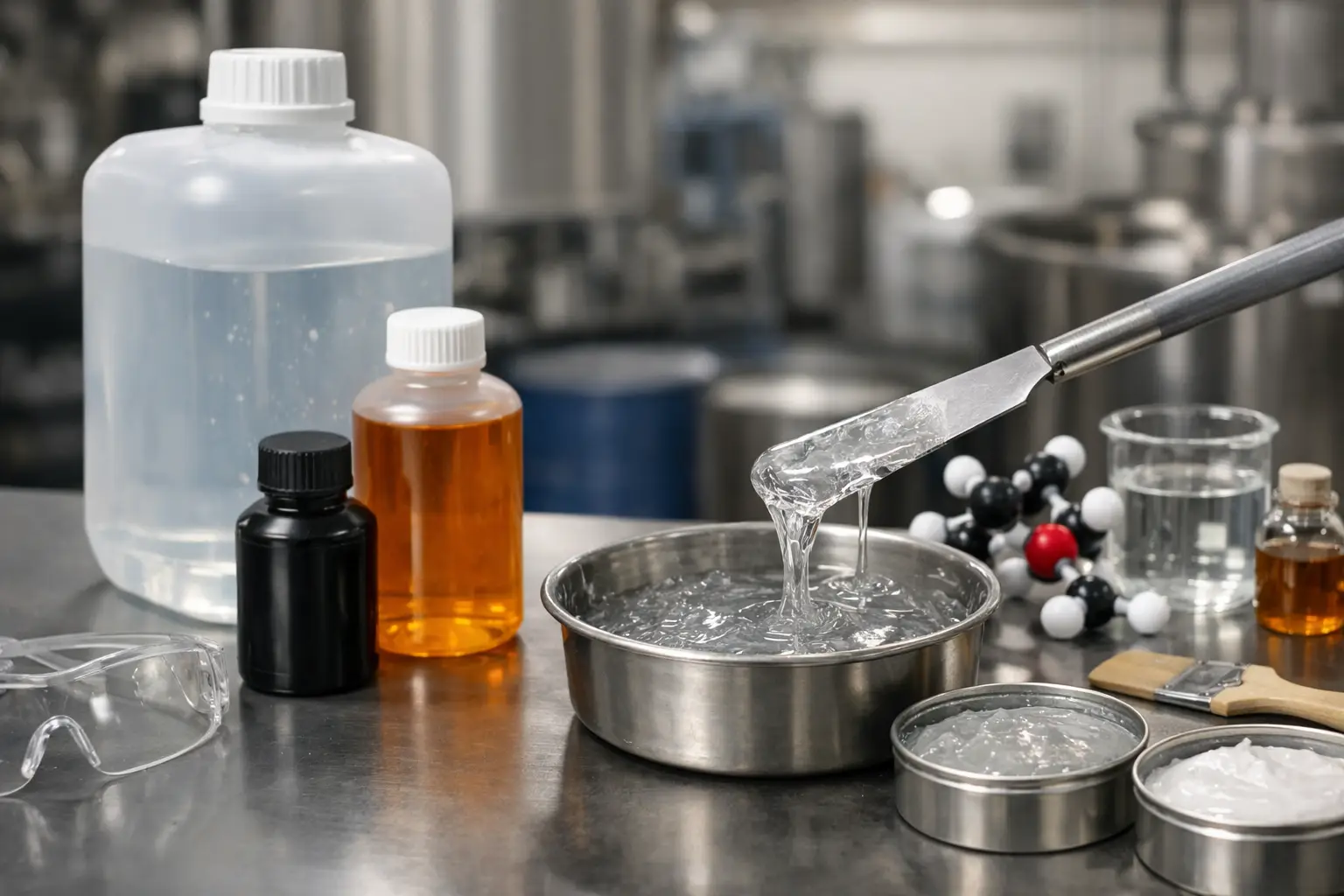
A resin grade can look suitable on a purchasing sheet yet create problems on the production floor if its solids level, solvent balance, and curing compatibility are not evaluated together. NPSN 901-75 epoxy resin is selected by industrial formulators when a higher-functionality epoxy platform and controlled application viscosity are needed for demanding coatings, electrical materials, adhesives, and composite systems. The practical question is not simply whether the resin can cure. It is whether it can deliver the required heat resistance, film build, processing window, and lot-to-lot consistency within the existing formulation.
What NPSN 901-75 Epoxy Resin Brings to a Formulation
NPSN 901-75 is commonly specified as a solvent-reduced epoxy resin grade for industrial formulation. The “75” designation is generally associated with a supplied nonvolatile content, but procurement and technical teams should always verify the exact solids content, carrier solvent, epoxy equivalent weight, viscosity, and color against the current technical data sheet and certificate of analysis. These values affect stoichiometry, VOC calculations, application behavior, and final cured properties.
Compared with standard liquid bisphenol-A epoxy systems, higher-functionality epoxy materials are often considered when the cured network must retain performance under heat, chemical exposure, or electrical service. Their crosslink density can support harder, more thermally stable films and molded systems. That advantage also creates trade-offs: increased crosslink density may reduce flexibility, narrow the acceptable cure schedule, or make solvent selection more critical.
For formulators, the supplied resin solution can provide a useful processing starting point. It may reduce the need for initial dilution and help achieve workable viscosity for coating, impregnation, or adhesive manufacture. However, the supplied solvent is part of the formulation, not an incidental detail. It influences flash-off, dry-film formation, coating defects, workplace handling requirements, and compliance calculations.
Where This Resin Grade Fits Best
NPSN 901-75 epoxy resin is relevant where a formulation needs more than basic ambient-cure adhesion. Common evaluation areas include electrical insulation varnishes, laminating systems, heat-resistant coatings, metal protection, electronic encapsulation, and structural adhesive formulations. In each case, performance depends on the complete resin-hardener-additive package rather than the resin alone.
Electrical insulation and electronic materials
Electrical applications often require dielectric reliability alongside thermal endurance and moisture resistance. Resin selection should therefore consider cured dielectric strength, dissipation factor, thermal cycling performance, and compatibility with fillers or reinforcing substrates. A resin that wets glass fabric or mineral filler effectively can improve production consistency, but final electrical performance must be tested on the actual cured construction.
For impregnation and encapsulation, viscosity control is especially important. The system must penetrate the required geometry without trapping air, then cure without excessive shrinkage or solvent retention. Defoamers, wetting agents, and carefully selected diluents may be necessary, but each addition should be checked for its effect on electrical properties and heat resistance.
Industrial protective coatings
In protective coatings, formulators may evaluate this grade for chemical resistance, film hardness, substrate adhesion, and elevated-temperature stability. The balance differs by end use. A lining coating may prioritize chemical resistance and cure completeness, while a metal primer may require better flexibility and adhesion under thermal movement.
A higher-crosslink-density resin system can provide strong resistance to many industrial environments, but it is not automatically the best answer for every coating. Thick films, low-temperature application, and field repair work can favor more forgiving resin-hardener combinations. Lab screening should include the intended substrate preparation, film thickness, pigmentation level, and cure conditions rather than relying only on clear-cast data.
Adhesives, laminates, and composites
For adhesive and composite producers, resin behavior before cure is just as important as cured strength. Wet-out of fiber, filler dispersion, open time, and sag resistance determine whether the material can be applied reliably at production speed. A resin solution may help with wetting and mixing, while the final network contributes to shear strength and heat resistance.
The trade-off is that solvent-containing systems require adequate flash-off before or during cure. If solvent leaves too slowly, the result can be porosity, reduced bond strength, trapped volatiles, or surface defects. If it leaves too quickly, pot life and flow can become difficult to manage. Drying and cure profiles should be developed as one process, not as separate steps.
Curing-Agent Selection Determines the Result
The right curing agent depends on the required processing temperature and service environment. Amine curing agents can support relatively fast reaction and strong adhesion, particularly in ambient or moderate-temperature systems. Polyamide hardeners may offer flexibility and practical handling for selected coatings and adhesives. Anhydride curing agents, including MTHPA, are frequently considered for electrical and heat-resistant epoxy systems that use elevated-temperature curing.
No curing agent should be selected by habit. Equivalent ratio must be calculated from the resin’s confirmed epoxy equivalent weight and the hardener’s active hydrogen equivalent or anhydride equivalent. Resin solids also matter. When NPSN 901-75 is supplied in solution, formulators should base stoichiometric calculations on resin solids and active epoxy content, not on the total package weight alone.
Accelerators can reduce cure time or lower the temperature needed to reach conversion, especially in anhydride systems. They should be used carefully. Excess accelerator may shorten pot life, increase exotherm, affect storage stability, or make a large casting harder to control. Small laboratory additions are not enough for scale-up decisions; pilot batches should confirm temperature rise, viscosity progression, and final cured performance.
Processing Controls That Prevent Avoidable Defects
Production stability begins with storage and handling. Keep containers tightly sealed, protect the material from contamination, and follow the supplier’s specified storage conditions. Moisture, incompatible residues, and uncontrolled solvent loss can shift viscosity and affect curing behavior. Before batch release, check appearance, viscosity, nonvolatile content, and epoxy value against agreed specifications.
Mixing order also matters. In filled systems, pre-dispersing pigments or mineral fillers into the resin phase can improve consistency before the curing agent is introduced. Avoid introducing excessive air during high-speed mixing. Where vacuum deaeration is used, set the process based on the actual solvent content and foaming tendency of the batch.
For coating production, evaluate flow, leveling, sag resistance, flash-off, and film appearance at the specified application viscosity. For cast or encapsulated parts, measure gel time, peak exotherm, hardness development, and void formation at the intended mass and geometry. A small sample cup often does not predict a larger electrical component or a thick adhesive bondline.
What Procurement Teams Should Confirm Before Ordering
A resin name alone is not a complete purchase specification. Technical and purchasing teams should align on the grade identity, solids percentage, solvent system, epoxy equivalent weight range, viscosity range, packaging, shelf life, and required documentation. If the material will be blended with existing stock, confirm compatibility through a controlled trial before full production use.
Supply continuity deserves the same attention as chemical performance. Industrial users need a source that can support repeat orders, maintain warehouse availability, prepare export documentation correctly, and provide traceable lot information. When a project also requires curing agents, accelerators, defoamers, fumed silica, or other additives, consolidating compatible epoxy-system raw materials can simplify inbound logistics and reduce formulation variability.
Dahua New Materials supports industrial buyers with stocked epoxy resins and related formulation materials, while manufacturing MTHPA epoxy hardener at a 45,000-ton annual capacity. For buyers managing international lead times, a supplier’s inventory position, documentation response, and ability to ship promptly can be as consequential as the quoted price.
The most effective next step is a disciplined qualification batch: confirm the current product data, calculate the active resin ratio correctly, and test the exact curing schedule and application conditions your plant will use. That work turns NPSN 901-75 from a catalog grade into a dependable part of a production-ready epoxy system.