

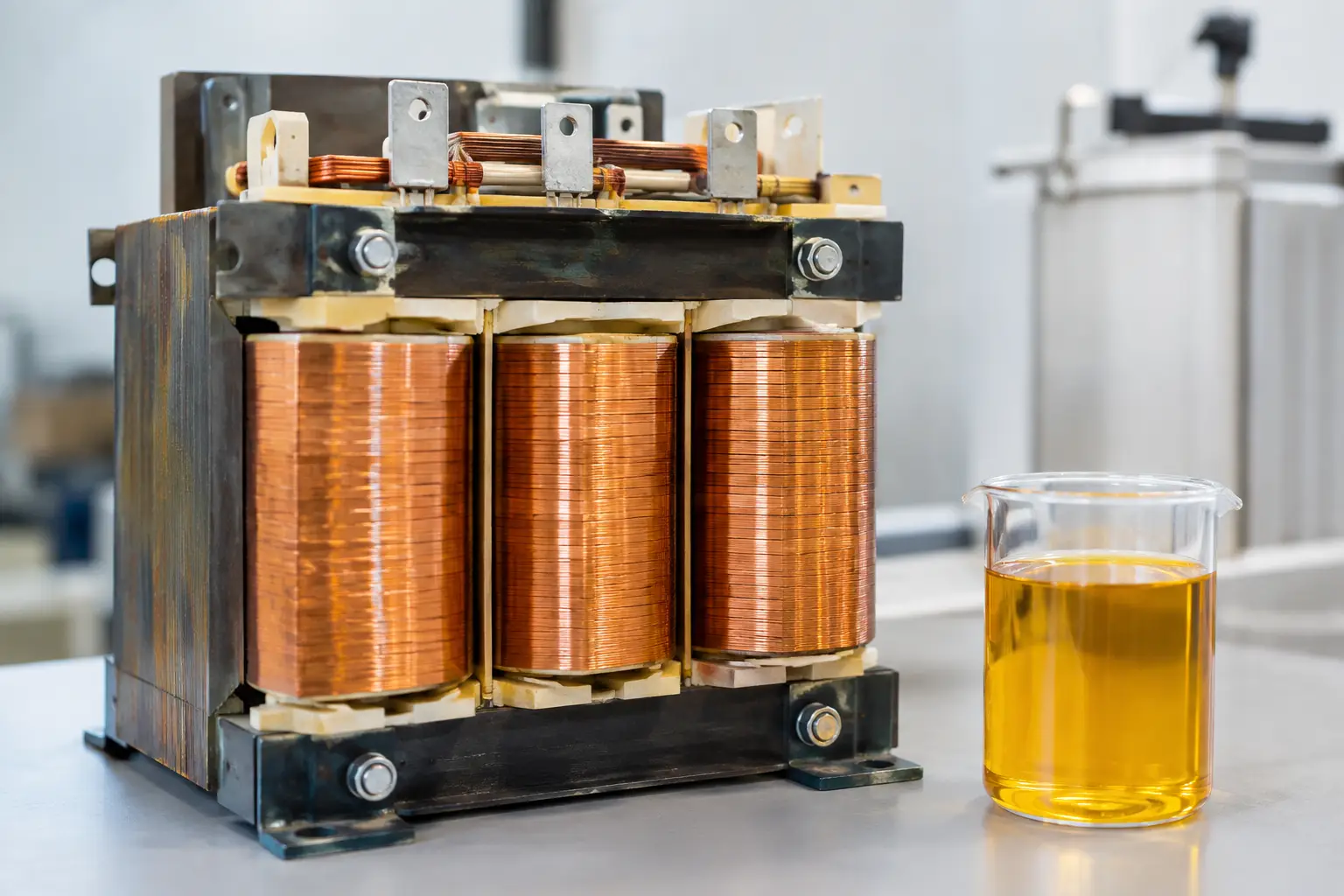
A transformer casting compound can pass a basic viscosity check and still fail where it matters most: inside a tightly wound coil, around conductor edges, or after repeated thermal cycling. The following MTHPA transformer casting example shows how formulators can build a practical epoxy system for electrical insulation while controlling the variables that most often cause voids, incomplete cure, excessive exotherm, and inconsistent dielectric performance.
This is a starting formulation for development and production trials, not a fixed recipe for every transformer design. Coil geometry, casting thickness, insulation class, filler loading, resin epoxy equivalent weight, and cure equipment all affect the final formulation window.
MTHPA Transformer Casting Example: A Starting Formula
For medium-viscosity epoxy casting of dry-type transformer components, instrument transformer coils, bushings, and similar electrical insulation parts, a liquid bisphenol A epoxy resin combined with MTHPA is a common system. MTHPA offers low viscosity, good compatibility with liquid epoxy resins, a long workable processing window before heat cure, and strong electrical insulation properties after proper curing.
A useful unfilled or lightly filled starting point is shown below. Parts are expressed by weight per 100 parts of epoxy resin.
| Material | Typical starting level | Function | |—|—:|—| | Liquid epoxy resin, such as CYD-128 | 100 parts | Primary resin and electrical insulation matrix | | MTHPA epoxy hardener | 85-95 parts | Anhydride curing agent | | Latent accelerator | 0.3-1.0 parts | Promotes anhydride-epoxy reaction during heating | | Defoamer, if required | 0.1-0.3 parts | Helps release entrained air during mixing and vacuum treatment | | Dried fused silica or electrical-grade mineral filler | 0-200+ parts | Reduces shrinkage and thermal expansion; improves dimensional stability |
With an epoxy resin EEW near 185-190, an MTHPA level near 90 phr is often a reasonable stoichiometric starting point. The correct ratio must be confirmed from the actual epoxy equivalent weight and MTHPA anhydride equivalent value. A change in resin grade, supplier assay, or target property can require adjustment.
For example, higher MTHPA use may support fuller cure where resin EEW is higher, but excessive hardener can reduce the balance of thermal and mechanical properties. Lower levels can leave unreacted epoxy functionality and may reduce heat resistance or chemical stability. The best ratio is the one validated by cure response, dielectric testing, and the actual casting process – not simply the ratio used in another plant.
Why This System Fits Transformer Casting
Transformer insulation casting requires more than a hard cured resin. The compound must flow through narrow spaces, wet conductor insulation, release trapped air under vacuum, and cure with limited internal stress. After cure, it must retain electrical insulation performance under heat, moisture exposure, vibration, and thermal expansion differences between copper, core components, and the epoxy body.
MTHPA is widely selected because it keeps the mixed epoxy system relatively low in viscosity compared with many solid or highly viscous curing approaches. This helps the compound penetrate winding assemblies and complex molds. Its comparatively long pot life also gives production teams time to mix, degas, transfer, and cast larger batches without the rapid viscosity rise associated with faster ambient-temperature systems.
The trade-off is that MTHPA systems require a controlled thermal cure. Accelerator choice and oven or mold temperature must be coordinated carefully. Adding more accelerator may shorten gel time, but it can also reduce workable time, raise exotherm in thick sections, and make a large cast harder to control. For this reason, a formulation designed for small sensor components may not be appropriate for a heavy transformer coil.
Processing the Casting Compound
Dry materials and dry equipment are essential. Anhydride-cured epoxy systems can be affected by moisture, and wet filler or insufficiently dried windings can introduce bubbles, hydrolysis risk, and poor electrical performance. Fused silica, mineral fillers, molds, and transformer assemblies should be prepared according to the production moisture-control standard before resin is introduced.
Start by charging the liquid epoxy resin to a clean mixing vessel. If filler is used, add it gradually under controlled agitation to avoid dry agglomerates and excessive air incorporation. In high-filler systems, the order of addition and mixer capability matter as much as the nominal formula. A low-shear blend may preserve a better viscosity profile, while inadequate dispersion can create sedimentation, weak areas, or inconsistent thermal expansion across the casting.
MTHPA should then be added at the calculated ratio, followed by the selected accelerator and any defoamer. Maintain a controlled mixing temperature. Mild warming can improve flow, but unnecessary heat shortens available working time and can increase the chance of premature reaction. Production teams should establish a maximum batch temperature, a defined mixing time, and a release criterion based on viscosity or visual uniformity.
After mixing, degas the compound under vacuum until entrained air has expanded and collapsed. Vacuum level, vessel freeboard, and batch size must be matched because an aggressive vacuum can cause foaming and material overflow. In many transformer casting operations, the coil assembly is also evacuated before resin introduction. This removes air from winding gaps and insulation interfaces that resin alone may not displace.
Casting under vacuum or vacuum-pressure conditions is often preferred for complex coils. The goal is not simply to fill the mold. It is to replace trapped air with resin and prevent voids at conductor corners, tape overlaps, terminals, and narrow channels. A slow, controlled resin feed generally produces better results than a fast pour that traps air ahead of the advancing liquid front.
A Practical Staged Cure Schedule
A staged thermal cure reduces the risk of a large casting gelling too quickly at the surface while the interior retains voids or develops excessive exotherm. A development schedule may begin with a lower-temperature gel stage, followed by a higher-temperature cure and, where needed, a post-cure.
For example, a production trial may use a gel stage around 80°C, followed by a primary cure around 120°C. The duration depends on casting mass, mold material, coil construction, accelerator type, and the required glass transition temperature. Thick castings need special attention because heat generated by the reaction can push the internal temperature significantly above the oven setpoint.
Thermocouples placed near the expected hot spot are valuable during initial qualification. If the internal temperature rises too sharply, the formulation may need less accelerator, a slower ramp rate, lower initial cure temperature, or a different filler loading. A cure schedule that works for a 2 kg casting cannot be assumed safe for a 50 kg casting.
After cure, cool the part gradually where practical. Rapid cooling can create stress at interfaces with copper conductors, inserts, or cores. The final cure profile should be approved using actual production-scale castings rather than small laboratory cups alone.
Quality Checks That Matter After Cure
A finished transformer casting should be evaluated as a system, not only by hardness. Visual inspection can identify surface defects, sink marks, cracks, and incomplete fill, but internal voids require more focused controls. Depending on the component and customer specification, quality teams may use X-ray inspection, ultrasonic methods, partial discharge testing, dielectric strength testing, insulation resistance, and thermal cycling.
Track viscosity before casting, gel time at the selected temperature, resin-to-hardener ratio, vacuum records, moisture condition, cure temperature history, and batch traceability. These controls make it easier to identify whether a defect originated in raw materials, mixing, evacuation, casting, or cure.
Filler selection also deserves qualification. Higher fused silica loading can reduce cure shrinkage and improve thermal expansion control, which is valuable around copper windings. However, it raises viscosity and may make penetration into narrow spaces more difficult. For fine winding structures, a lower-viscosity system with optimized vacuum processing can be more effective than a heavily filled formula.
For manufacturers requiring dependable bulk supply, Dahua New Materials produces MTHPA epoxy hardener at industrial scale and supports matching with liquid epoxy resin, accelerators, and formulation additives. Consistent raw-material specifications and reliable shipment planning are especially valuable when a transformer casting line cannot tolerate batch-to-batch changes.
The most useful next step is to run this formulation through a production-representative coil and measure what the resin experiences in the mold: flow distance, vacuum response, internal peak temperature, cure completeness, and electrical test results. Those results will define a casting system that works on the factory floor, not only on paper.