

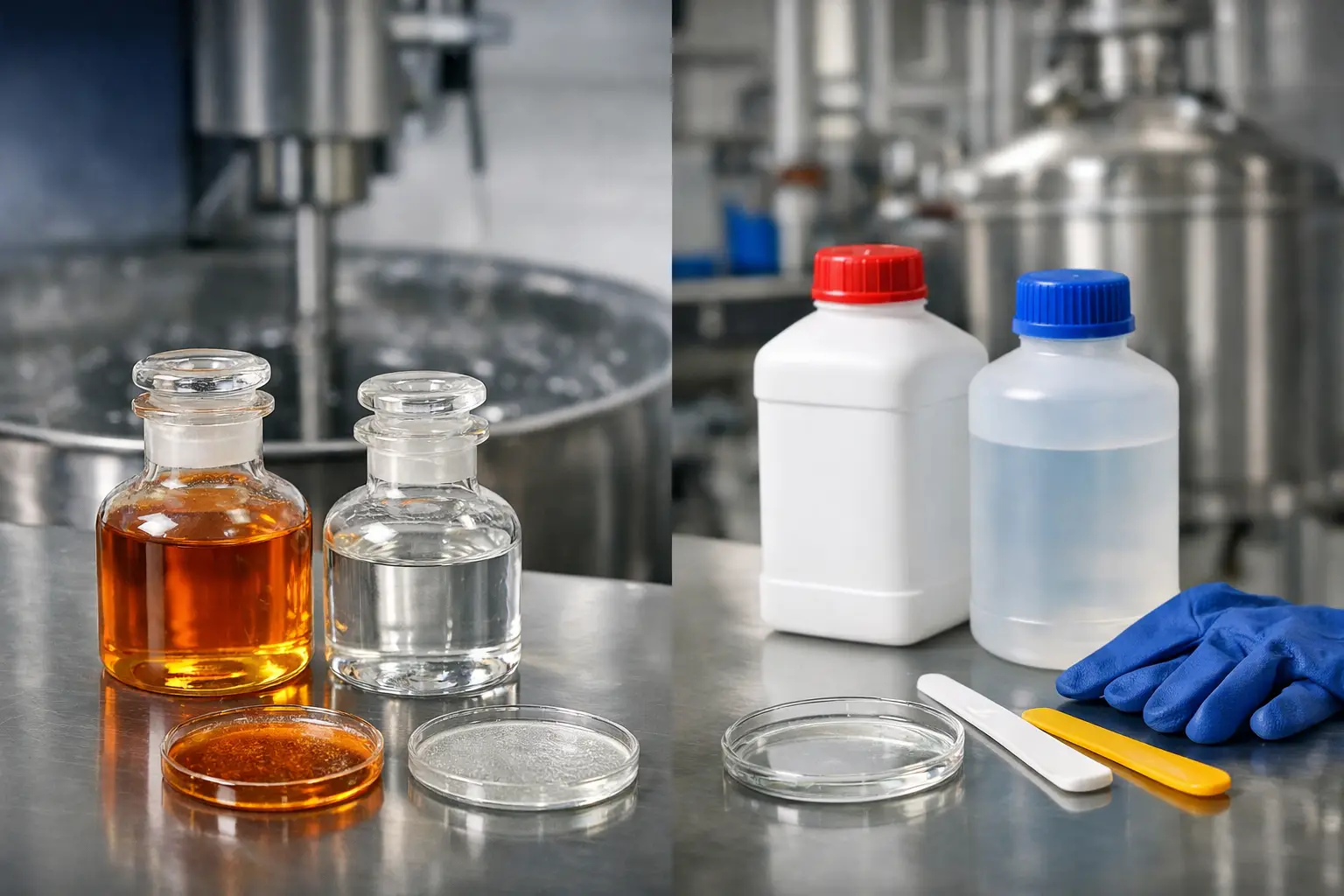
For an epoxy formulator, MTHPA versus amine curing is not a simple choice between two hardeners. It is a decision that affects mix viscosity, working time, production temperature, exotherm control, dielectric performance, and the practical rhythm of a manufacturing line. An amine-cured adhesive that must set at room temperature has different requirements from an electrical encapsulant that will cure in a heated oven.
MTHPA, or methyltetrahydrophthalic anhydride, is generally selected where low viscosity, long pot life, heat-cure processing, and strong electrical insulation are priorities. Amine curing agents are often selected where ambient or low-temperature cure, faster handling strength, and field application matter more. The best system is the one that matches the resin, part geometry, cure equipment, and performance specification.
MTHPA Versus Amine Curing: The Core Difference
MTHPA is an anhydride curing agent. In epoxy formulations, anhydrides commonly require elevated-temperature curing and are frequently used with an accelerator to achieve a controlled cure schedule. Their reaction profile makes them well suited to production environments that can meter, mix, degas, and heat-cure parts consistently.
Amine curing agents react with epoxy through active hydrogen groups. Depending on the amine chemistry, they can cure at room temperature, at moderately elevated temperature, or through a staged cure process. Aliphatic amines are often chosen for faster ambient reactivity, while cycloaliphatic, aromatic, modified amine, and polyamide systems offer different balances of cure speed, chemical resistance, flexibility, color stability, and heat resistance.
The distinction matters because cure chemistry controls more than gel time. It determines whether a formulation remains workable long enough to impregnate fiber, flow around electronic components, wet a substrate, or be applied over a large coating area. It also influences crosslink density, shrinkage stress, moisture sensitivity, and the final network structure.
When MTHPA Is the Better Fit
MTHPA is widely used in electrical insulation, electronics encapsulation, castings, laminates, filament winding, and composite applications that use thermal cure. Its low viscosity can help formulators achieve better resin flow, easier filler incorporation, and more efficient vacuum degassing than many higher-viscosity curing-agent systems. This is especially useful for highly filled compounds, narrow-gap potting, and glass-fiber impregnation.
Long pot life is another practical advantage. A production team can prepare a larger batch, process multiple parts, and maintain more stable flow behavior before the material begins to gel. That does not eliminate the need for process control. Temperature, accelerator type and dosage, moisture exposure, and batch mass all affect working life. Still, an anhydride system usually gives more latitude than a fast-reacting amine formulation.
For high-voltage and electronic applications, MTHPA-cured epoxy can provide excellent electrical insulation and good thermal stability when paired with a suitable epoxy resin, accelerator, filler package, and cure schedule. The cured system is often valued for low dielectric loss, reliable dimensional stability, and resistance to the thermal stresses encountered in electrical components.
MTHPA also supports controlled heat curing. A typical process may include a lower-temperature gel stage followed by a higher-temperature post-cure, but the actual schedule must be validated for the selected resin and part thickness. A controlled oven process can reduce variation from one production batch to the next and help manufacturers obtain more consistent mechanical and electrical properties.
The trade-off is clear: MTHPA is not usually the preferred answer when a product must cure quickly at ambient conditions. It requires thermal energy, cure equipment, and disciplined control of mixing ratio and moisture. For a jobsite coating or a repair adhesive, those requirements may outweigh its processing benefits.
When Amine Curing Is the Better Fit
Amine curing is often the practical route for ambient-cure coatings, concrete repair products, structural adhesives, floor systems, marine applications, and field-applied protective materials. The ability to develop handling strength without a heated oven can reduce equipment requirements and shorten installation time.
Amine systems also offer broad formulation flexibility. A formulator can select a fast, low-viscosity amine for quick turnaround, a modified cycloaliphatic amine for coatings performance, or a polyamide curing agent where adhesion and flexibility are more important than maximum heat resistance. This range is valuable when a product must meet a specific balance of cure speed, hardness, impact performance, and substrate adhesion.
However, fast reactivity can create processing limits. Pot life may be shorter, especially in larger mixed batches where exotherm raises the temperature and accelerates the reaction. High-viscosity amines or polyamides can also make filler loading, fiber wet-out, or fine electronic encapsulation more difficult unless the formulation is adjusted with suitable resin grades or reactive diluents.
Some amine-cured systems are sensitive to temperature and humidity during application. Surface blush, carbonation, reduced cure speed, or appearance defects can occur when conditions are poorly controlled. These issues are manageable through curing-agent selection, application practice, and formulation design, but they should be considered early rather than treated as a production surprise.
Compare the Process Requirements Before Comparing Price
Price per kilogram is relevant, but it does not show the full cost of a curing system. Procurement and technical teams should compare the finished process: material consumption, mix ratio, batch life, energy use, labor time, scrap risk, cure-cycle capacity, and required storage conditions.
For MTHPA systems, the key operational question is whether the plant has reliable heated curing capacity. If it does, the long working life and low viscosity may improve throughput, reduce voids, and support better filler dispersion. These benefits can be significant in casting and electrical production, where a rejected part can cost far more than the hardener itself.
For amine systems, the key question is whether room-temperature cure creates a genuine commercial advantage. In a field-applied coating or adhesive, avoiding ovens may be decisive. In a high-volume factory, however, short pot life and variable ambient conditions can introduce costs that are not visible in the initial purchase price.
Supply continuity also deserves attention. Curing agents should be qualified not only by a laboratory sample but by lot-to-lot consistency, packaging suitability, lead time, and the supplier’s ability to support repeat orders. Manufacturers using MTHPA at scale often benefit from direct source access, particularly when annual demand is large and production schedules cannot tolerate missed deliveries.
Formulation Factors That Change the Answer
The resin grade is the first factor. Standard liquid bisphenol A epoxy resins such as CYD-127 and CYD-128 can be formulated with either anhydride or amine curing routes, but the expected viscosity, equivalent weight, cure profile, and final properties will differ. Novolac epoxy systems may be chosen for higher heat or chemical resistance, yet they also require careful hardener and accelerator matching.
Stoichiometry must be calculated from epoxy equivalent weight and the curing agent’s equivalent weight rather than copied from a previous formula. For MTHPA, formulators consider the anhydride equivalent and the selected accelerator package. For amines, the active hydrogen equivalent weight is central. A small ratio adjustment can affect residual functionality, cure speed, hardness, chemical resistance, and electrical performance.
Fillers and additives can shift the decision as well. Fumed silica may control sag or settling, but it raises viscosity. Defoamers and wetting agents may improve processing, while accelerators can shorten anhydride cure cycles. Every addition should be evaluated against pot life, dielectric requirements, color, and storage stability. A curing agent cannot be chosen in isolation from the rest of the formulation.
Part geometry is equally important. Thick castings generate more exotherm and may require a slower, staged schedule. Thin coatings need adequate wetting and may need faster early cure. Electronics encapsulation requires low void content and reliable penetration around components. Composite processing demands enough open time for complete impregnation before gelation.
A Practical Selection Path for Industrial Buyers
Start with the required cure environment. If the product must cure at room temperature or be applied outside a controlled factory, screen amine and polyamide systems first. If the plant uses ovens and the application values low viscosity, long pot life, and electrical performance, MTHPA should be a primary candidate.
Next, define measurable acceptance criteria: initial mixed viscosity, gel time at process temperature, cure schedule, glass transition temperature, hardness, tensile or flexural properties, dielectric behavior, chemical resistance, and appearance. Run trials at the intended batch mass, not only in small laboratory cups. Exotherm and working time can change substantially when the batch size increases.
Finally, qualify the supply program alongside the chemistry. Dahua New Materials manufactures MTHPA with 45,000-ton annual capacity and can support industrial buyers with direct-source supply, stocked epoxy materials, and coordinated sourcing across resins, curing agents, accelerators, and additives. For repeat production, a compatible material package and dependable delivery plan are as valuable as an attractive initial quotation.
A successful epoxy system is built around the real conditions of use. Choose MTHPA when controlled heat cure, low viscosity, long processing latitude, and electrical insulation support the application. Choose an amine system when ambient cure, faster turnaround, or application flexibility drives the process. Then validate the complete formula under production conditions before committing to volume.