

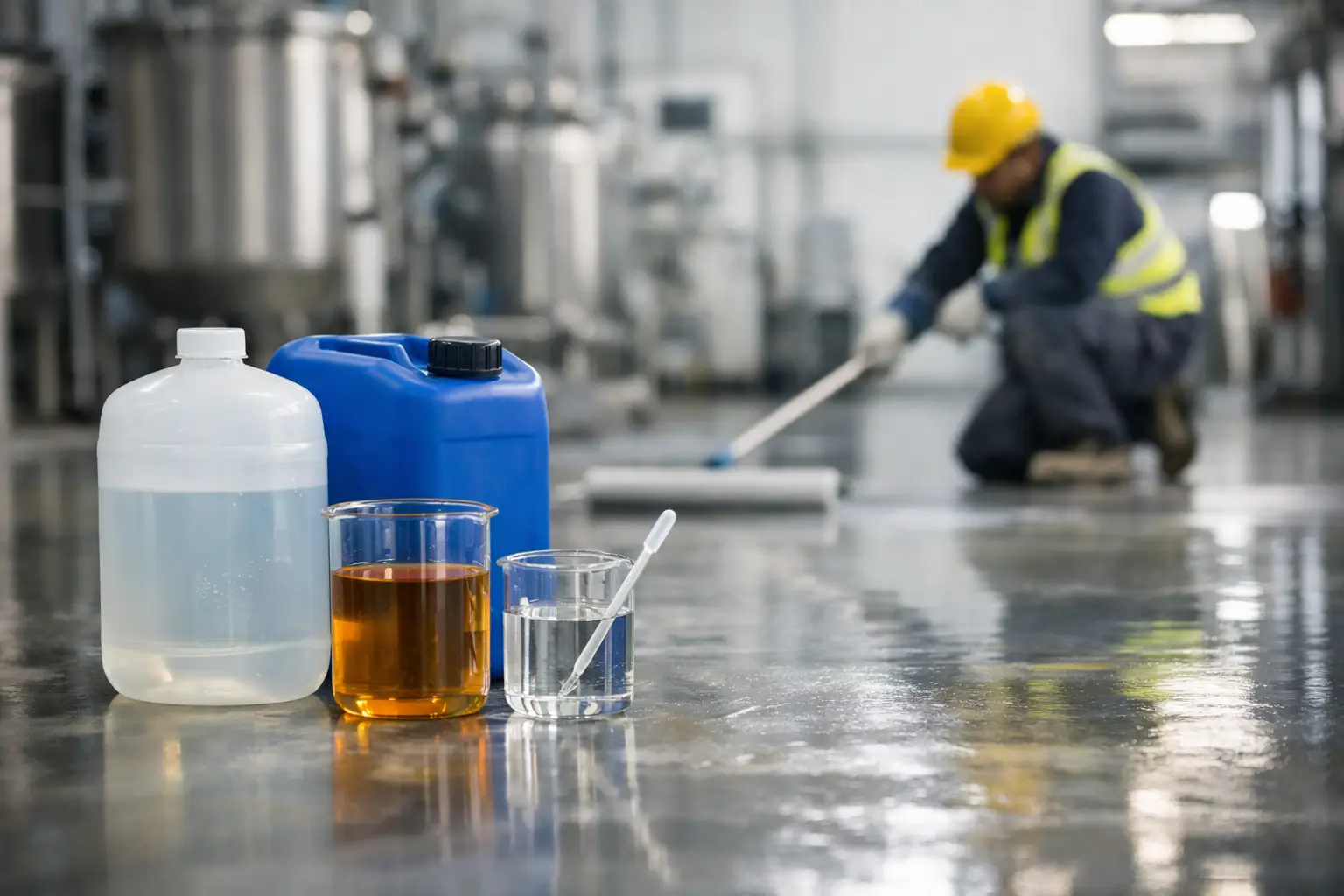
A curing agent can determine whether an epoxy system delivers reliable insulation, structural strength, chemical resistance, or an unacceptable batch failure. The epoxy curing agent is not simply an additive used to harden resin. It controls network structure, processing window, exotherm, cure schedule, and many of the properties buyers evaluate in finished industrial products.
For procurement and formulation teams, selection starts with the application and production conditions, not with a generic hardener grade. A fast ambient-cure coating, a high-temperature electrical encapsulant, and a flexible structural adhesive may all use epoxy resin, but they require very different curing chemistry. The right choice balances technical performance with available equipment, line speed, storage conditions, and consistent bulk supply.
What an Epoxy Curing Agent Does
Epoxy resin contains reactive epoxy groups that must react with a compatible curing agent to form a crosslinked thermoset polymer. This reaction changes the resin from a liquid or semi-solid material into a durable cured system. The final crosslink density and chemical structure affect hardness, tensile and flexural properties, heat resistance, dielectric behavior, adhesion, shrinkage, and resistance to water or chemicals.
The curing agent also defines the practical handling profile. Formulators need to know viscosity for mixing and filling, pot life for production scheduling, gel time for process control, and cure temperature for oven capacity or field application. A product with excellent final properties may still be unsuitable if its working time is too short for a large mix, its viscosity prevents proper wet-out, or its cure cycle slows a production line.
Equivalent ratio matters as much as chemical family. Resin epoxy equivalent weight, curing-agent functionality, accelerator level, fillers, pigments, and reactive diluents all affect the stoichiometric calculation. A formulation should be verified through laboratory testing rather than relying on a universal phr recommendation. Small ratio changes can alter cure speed, residual reactivity, brittleness, and heat performance.
Main Epoxy Curing Agent Families
Anhydride Curing Agents
Anhydrides are widely selected for electrical insulation, electronic encapsulation, composites, laminates, and other applications that benefit from low viscosity, long pot life, low shrinkage, and strong electrical properties. They generally require elevated-temperature curing and often use an accelerator to obtain an efficient cure profile.
MTHPA, or methyltetrahydrophthalic anhydride, is a common choice where formulators need low-viscosity processing and a stable working window. In filled encapsulation compounds, this can support better filler loading and easier mixing. Properly designed anhydride-cured systems can provide good heat resistance, moisture resistance, mechanical strength, and dielectric performance.
The trade-off is process demand. Anhydride systems are usually less appropriate where ambient cure is required or where the manufacturer cannot control heating accurately. Moisture control, mixing quality, accelerator selection, and cure schedule should be managed carefully, especially for electrical applications with strict reliability requirements.
Amine Curing Agents
Amine curing agents are valued for room-temperature or low-temperature cure capability, high reactivity, and good adhesion. They are commonly used in protective coatings, flooring, adhesives, repair materials, and construction systems. Aliphatic amines can cure quickly, while cycloaliphatic and modified amines may provide a more balanced combination of working time, color stability, and chemical resistance.
Fast reactivity is useful when production needs rapid return to service. It can also create challenges. Pot life may be limited, mix temperature can rise quickly in larger batches, and some amine systems are sensitive to humid conditions. Surface carbonation or amine blush can affect appearance and intercoat adhesion if application conditions are not controlled.
Amine selection should therefore consider batch size, application temperature, film thickness, substrate condition, and cure environment. A hardener that performs well in a small laboratory cup may behave differently in a high-volume coating batch or a thick poured casting.
Polyamide Curing Agents
Polyamide curing agents are often used in industrial coatings and adhesives where flexibility, adhesion, corrosion protection, and a relatively forgiving cure profile are priorities. They can be useful for coatings applied to steel, concrete, and marine-related substrates, particularly where impact resistance matters more than maximum heat resistance.
Compared with many fast amines, polyamides may offer longer pot life and improved flexibility. The compromise can be lower heat resistance and slower development of certain chemical properties. This is not a disadvantage when the service environment supports it. It is a reason to match the hardener to real exposure conditions rather than selecting based on cure speed alone.
Specialty and Modified Curing Agents
Modified amines, phenalkamines, adducts, and other specialty curing agents help formulators address specific requirements such as low-temperature cure, wet-surface tolerance, reduced blush, faster hardness development, or improved compatibility with a particular resin system. These products can solve real production problems, but performance claims should be evaluated in the complete formulation.
Fillers, pigments, defoamers, rheology modifiers, and reactive diluents can all change the behavior of a curing system. A compatible hardener may still need adjustment after filler loading increases, a dispersant changes, or the target application thickness is modified.
How to Select an Epoxy Curing Agent
A productive selection process starts with the end-use requirement, then works backward to processing and supply conditions. First, identify whether the finished product needs ambient cure, a controlled oven cure, or a staged cure. This immediately narrows the viable chemistry.
Next, assess the performance priorities. Electrical encapsulation compounds may prioritize dielectric strength, low ionic contamination, thermal stability, and low-viscosity filler processing. A structural adhesive may require adhesion, toughness, and controlled exotherm. A protective coating may need chemical resistance, workable pot life, and reliable cure under the expected jobsite temperature and humidity.
Viscosity deserves close attention. Low viscosity can improve mixing, substrate wetting, mold filling, and filler incorporation. However, very low viscosity is not always preferable for vertical coatings or gap-filling adhesives, where sag control is needed. Rheology should be evaluated at actual production temperature, not only from a technical data sheet value measured under different conditions.
Pot life must match the batch size and the application method. A curing agent that gives a 30-minute pot life may be efficient for small, frequent mixes but risky for a large tank or a long application run. Pot life also shortens as temperature rises. During warm-weather production or in poorly cooled mixing areas, the same formula may need different batch controls.
Finally, confirm commercial fit. Industrial users need lot-to-lot consistency, clear quality documentation, suitable packaging, available warehouse stock, and shipping schedules that protect production continuity. Qualification should include more than initial sample approval. Repeat deliveries must perform consistently in the plant.
Testing Before Production Approval
A practical evaluation uses the complete resin, curing agent, accelerator, and additive package planned for commercial production. Testing a curing agent only with neat resin may not predict behavior after pigments, fumed silica, flame retardants, or mineral fillers are introduced.
At minimum, teams should measure mix viscosity, pot life, gel time, cure profile, hardness development, adhesion, and relevant mechanical or electrical properties. For demanding applications, include thermal cycling, chemical immersion, humidity exposure, dielectric testing, and aging studies. Thick-section castings should be checked for exotherm and internal cure because results can differ substantially from thin films.
It is also wise to document the acceptable process range. Instead of approving one exact laboratory condition, define operating limits for mix ratio, temperature, humidity, mixing time, and cure schedule. This gives production teams practical controls and helps prevent quality variation when conditions change.
Supply Planning for Curing Systems
Curing-agent procurement should be coordinated with resin and additive purchasing. A resin replacement, different filler source, or new accelerator may require revalidation even when each material meets its individual specification. Consolidating technical review across the system reduces surprises at scale.
For high-volume MTHPA requirements, Dahua New Materials combines direct manufacturing capacity with stocked epoxy resins, amine and polyamide curing agents, accelerators, and formulation additives. This helps manufacturers compare compatible inputs and plan supply around actual formulation needs rather than treating each material as an isolated purchase.
Packaging and storage must also be considered. Many curing agents are sensitive to moisture, temperature, or prolonged storage. Confirm shelf life, handling requirements, container size, and expected transit conditions before setting production inventory levels. The lowest purchase price can lose value quickly if material is overstocked, contaminated, or unavailable when an approved batch must run.
The most effective epoxy curing agent is the one that produces repeatable performance within your actual equipment, climate, cure schedule, and supply plan. Start with the required end-use properties, validate the complete formulation under realistic conditions, and build purchasing specifications around the controls that keep every production batch on target.